5 Signs It’s Time to Replace Your Concrete Driveway in Dallas-Fort Worth
Your concrete driveway is one of the most heavily used surfaces on your property, and Dallas-Fort Worth’s unique climate creates challenges that many homeowners don’t fully appreciate. The combination of freeze-thaw cycles, intense summer heat, heavy rainfall, and expansive clay soils means your driveway faces constant stress. At Precision Pavers, we’ve worked with thousands of North Texas families for over 40 years, helping them understand when repair efforts end and replacement becomes the smart choice. While concrete has served homeowners well, modern paver driveways offer superior durability, flexibility, and long-term value. The question isn’t always whether your concrete needs repair; it’s whether you’re ready for a better, more resilient solution. If you’re seeing signs of deterioration, a professional assessment can help you make the best decision for your property. Let’s explore five clear signs that your concrete driveway has reached the end of its useful life.
Sign 1: Extensive Cracking and Spider Cracking Patterns
One crack in your driveway isn’t necessarily cause for alarm, but extensive cracking is. When you notice interconnected cracks that resemble a spider web or alligator skin covering much of your driveway surface, it signals serious structural issues. DFW’s freeze-thaw cycles are particularly brutal on concrete driveways. Water seeps into pores in the concrete, and when temperatures drop below freezing, that water expands with tremendous force. Over repeated cycles, this expansion weakens the concrete until cracks form and spread. Large cracks deeper than 2 inches that extend all the way through to the sub-base are especially problematic. These cracks allow water to penetrate deep into the foundation, accelerating deterioration. While crack sealing can extend concrete life temporarily, extensive cracking signals that replacement time has arrived.
Sign 2: Spalling and Scaling Leave Surface Pitted and Unsafe
Spalling is when the top layer of your concrete begins to flake, chip, or peel away, leaving an uneven, pitted surface. Scaling involves the surface peeling in larger sections. In the Dallas-Fort Worth area, where freeze-thaw cycles, heavy rainfall, and occasional deicing salt combine, spalling develops rapidly once it starts. The damage appears as rough patches, exposed aggregate, and pits of varying depths across your driveway. Beyond being unsightly, spalling creates safety hazards. Uneven surfaces increase tripping risks, and deteriorating concrete can damage vehicles. Once spalling begins, it’s nearly impossible to reverse. Temporary fixes like resurfacing overlay or patching slow the problem temporarily, but the underlying cause persists. When spalling covers more than isolated areas, replacement with a more durable solution like paver driveways makes financial sense.
Sign 3: Heaving, Settling, and Uneven Surfaces
A perfectly level driveway that suddenly develops high spots or low areas indicates foundation movement beneath the surface. DFW’s expansive clay soils are notorious for this problem. Clay absorbs moisture like a sponge during wet periods and shrinks significantly during dry spells. This expansion and contraction exerts tremendous pressure on concrete, causing it to heave upward or settle unevenly. Uneven driveways don’t just look bad. They create vehicle damage risks, drainage problems that worsen deterioration, and potential tripping hazards. This type of damage requires professional assessment, but if the sub-base has shifted or eroded, the entire driveway may need replacement rather than repair.
Sign 4: Multiple Potholes and Deep Structural Damage
Potholes start small but quickly worsen. One or two minor potholes can be patched, but multiple deep holes indicate structural compromise. When potholes penetrate the concrete and damage the foundation beneath, the surrounding area becomes unstable. Water pools in potholes, perpetuating freeze-thaw damage. Vehicles hitting deep potholes suffer damage, and the safety liability increases. If your driveway has developed multiple potholes deep enough to damage the foundation, patching becomes a temporary band-aid. Replacement is the more cost-effective long-term solution.
Sign 5: Your Driveway Is 20 Years Old or More
Concrete driveways typically last around 30 years with excellent maintenance, but most reach the end of serviceable life around 20 to 25 years. If your driveway is approaching or has exceeded this age, especially with evidence of deterioration, replacement planning should begin now. Even if you don’t see obvious damage yet, aging concrete becomes increasingly vulnerable to all the issues mentioned above.
Your Driveway Replacement Solution
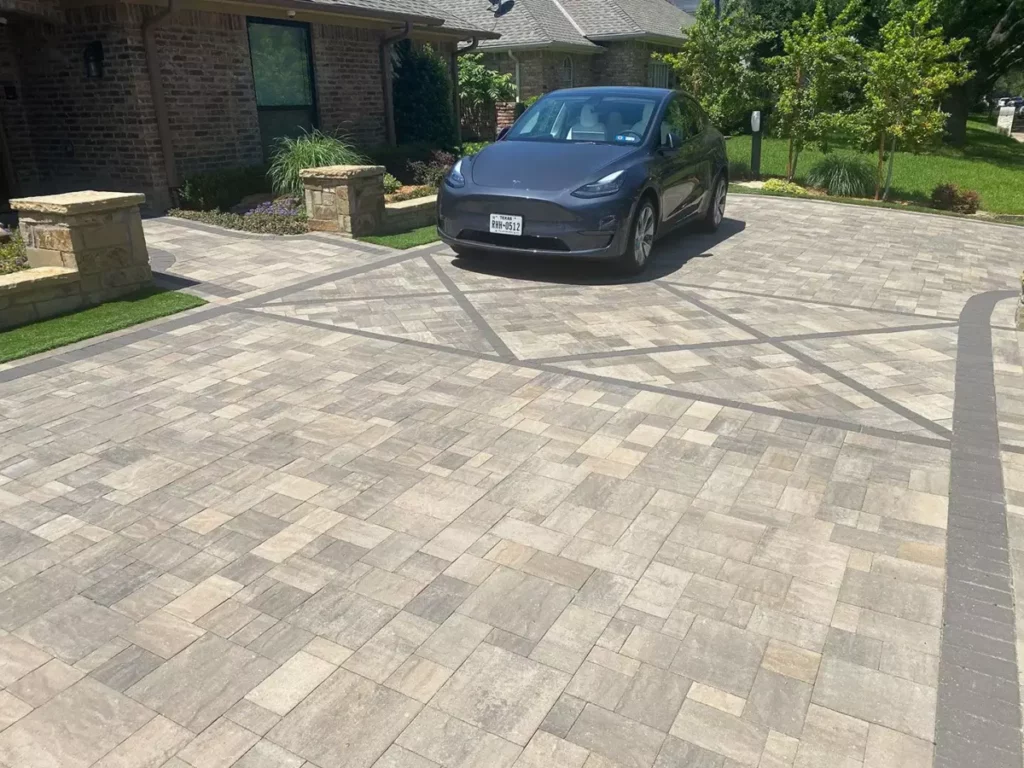
When concrete replacement time arrives, consider upgrading to a paver driveway. Precision Pavers offers expert design and installation that accounts for DFW’s specific climate challenges. Pavers flex with ground movement, resist freeze-thaw damage, and provide individual paver replacement rather than entire slab replacement when needed.
Ready to transform your Dallas-Fort Worth driveway? Contact Precision Pavers for a free assessment and design consultation. Our expert team will evaluate your driveway and discuss your best options. Call us or visit our website to schedule your appointment today.