
Why Pavers Stay Cooler Than Concrete Around Pools: Are They the Better Choice for DFW Homes?
If you’ve ever stepped barefoot onto a concrete pool deck during a Texas summer, you know how uncomfortable it can be. In the Dallas-Fort Worth area, where temperatures frequently climb into the upper 90s and even exceed 100 degrees during peak summer months, choosing the right pool deck material can significantly impact comfort, safety, and overall enjoyment of your outdoor space.
Many homeowners planning a new pool installation or pool deck renovation ask the same question: Why do pavers stay cooler than concrete around pools?
At Precision Pavers, we specialize in designing and installing custom outdoor living spaces throughout DFW, including pool decks, patios, walkways, and outdoor entertainment areas. Our team understands how North Texas weather affects hardscape materials, and we help homeowners select solutions that combine beauty, durability, and year-round performance. Pavers have become one of the most popular pool deck options because they offer a cooler surface, exceptional durability, and timeless curb appeal.
If you’re considering upgrading your pool area, understanding the science behind cooler pavers can help you make a more informed decision for your family and your property.
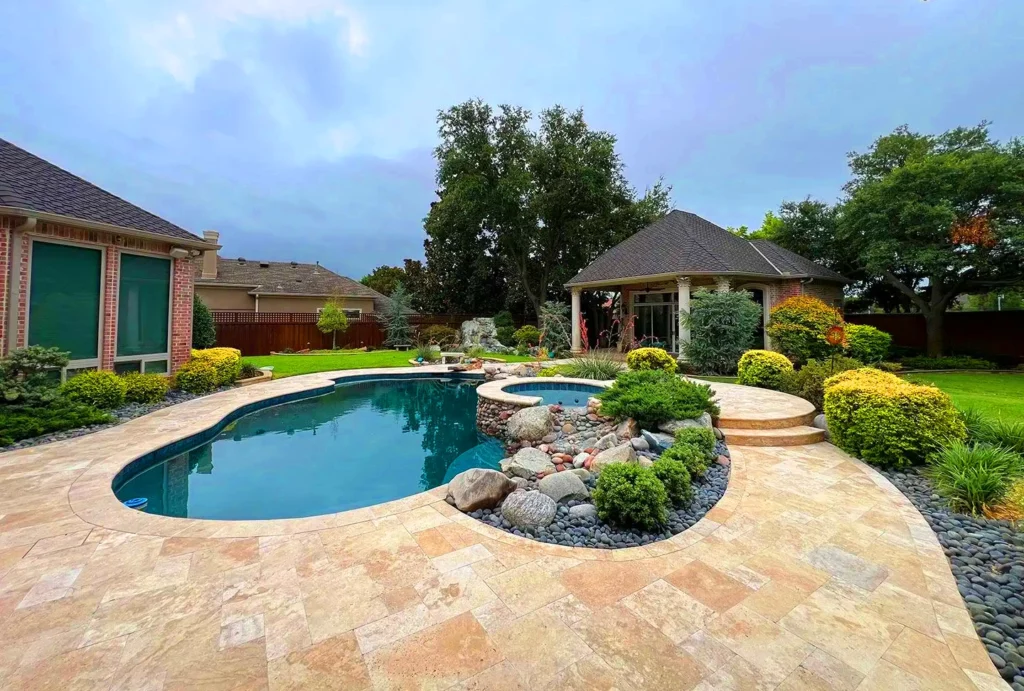
Why Pool Deck Temperature Matters
When evaluating pool deck materials, appearance is often the first consideration. However, comfort and safety are equally important.
Pool decks receive direct sunlight for hours each day. Materials that absorb and retain heat can become extremely hot underfoot, creating an unpleasant experience for swimmers and guests.
Excessively hot pool surfaces can lead to:
- Discomfort when walking barefoot
- Increased risk of minor foot burns
- Reduced usability during peak afternoon hours
- Greater heat reflection around lounging areas
In North Texas communities such as Frisco, McKinney, Southlake, Prosper, and Flower Mound, homeowners spend a significant portion of the year enjoying their pools. Choosing a cooler decking material helps maximize that investment.
How Pavers Reflect Heat More Effectively
One of the primary reasons pavers stay cooler than concrete is their composition and design.
Concrete slabs are poured as a single continuous surface. Once heated by the sun, the slab absorbs and stores thermal energy across a large area. This stored heat continues radiating upward even after direct sunlight decreases.
Pavers function differently.
Individual pavers are separated by joints filled with sand or polymeric material. These joints help reduce heat transfer and allow the surface to dissipate heat more efficiently. The segmented design prevents large-scale heat retention that commonly occurs with traditional concrete slabs.
Additionally, many modern pavers are manufactured using materials and finishes specifically designed to reflect more sunlight and absorb less heat.
As a result, homeowners often notice that pavers feel significantly cooler under bare feet compared to conventional concrete surfaces.
Lighter Colors Enhance Cooling Performance
Color plays a major role in surface temperature.
Dark materials naturally absorb more solar energy, while lighter colors reflect a greater percentage of sunlight.
One advantage of pavers is the wide range of color options available. Homeowners can choose shades specifically designed to reduce heat absorption while complementing their home’s architectural style.
Popular pool deck colors in DFW include:
- Light beige
- Sandstone
- Ivory
- Buff
- Light gray
- Travertine-inspired tones
These lighter hues can remain noticeably cooler than darker concrete surfaces exposed to the same sunlight conditions.
Many homeowners also choose textured pavers that further reduce heat concentration while adding visual interest and slip resistance.
Pavers Offer Better Airflow and Heat Dissipation
Another factor that contributes to cooler pool decks is airflow.
Because pavers are installed individually rather than poured as a monolithic slab, small spaces between units allow for improved heat dissipation. The base system beneath the pavers can also help reduce heat buildup compared to solid concrete installations.
This design provides several advantages:
- Faster cooling after sunset
- Reduced surface heat retention
- Improved comfort throughout the day
- Better moisture drainage
In a climate like North Texas, where summer evenings are often spent outdoors, quicker cooling can make a substantial difference in overall enjoyment.
Safety Benefits Beyond Temperature
While cooler surfaces are a major benefit, pavers also provide important safety advantages around pools.
Many paver products feature textured finishes that improve traction when wet. This can help reduce slips and falls around high-traffic pool areas.
Additional safety benefits include:
- Slip-resistant textures
- Reduced standing water through improved drainage
- Easier repairs if damage occurs
- More consistent walking surfaces
Unlike concrete, which can crack and create uneven edges over time, individual pavers can often be replaced without disturbing the surrounding deck.
This flexibility helps maintain a safer environment while extending the life of the installation.
Long-Term Durability in DFW’s Climate
North Texas weather presents unique challenges for outdoor hardscapes.
Extreme summer heat, occasional freezing temperatures, heavy rain events, and shifting clay soils can all contribute to surface deterioration over time.
Traditional concrete slabs are particularly vulnerable to:
- Cracking
- Expansion damage
- Surface discoloration
- Settling issues
Interlocking pavers are designed to accommodate slight ground movement without developing the large cracks commonly seen in concrete.
Because individual pavers can move independently within the system, they often perform better in areas where soil expansion and contraction are common.
This durability makes pavers a smart long-term investment for homeowners seeking both comfort and performance.
Are Pavers Worth the Investment Around a Pool?
While pavers may have a higher initial installation cost than basic poured concrete, many homeowners find that the benefits outweigh the upfront expense.
Pavers offer:
- Cooler walking surfaces
- Enhanced safety
- Superior aesthetics
- Greater durability
- Easier maintenance and repairs
- Increased property appeal
For homeowners planning to stay in their homes for years to come, these advantages often translate into better long-term value and a more enjoyable outdoor living experience.
A beautifully designed paver pool deck can also complement outdoor kitchens, patios, fire features, and other backyard amenities, creating a cohesive outdoor retreat.
Create a Cooler, More Comfortable Poolside Experience
When temperatures soar across Dallas-Fort Worth, the materials surrounding your pool can make a significant difference in comfort and usability. Thanks to their unique construction, heat-reflective properties, and superior airflow, pavers consistently outperform traditional concrete when it comes to staying cooler underfoot.
For homeowners who want a safer, more attractive, and more comfortable pool environment, pavers remain one of the best pool deck options available.
At Precision Pavers, we help homeowners throughout DFW create custom outdoor spaces designed to withstand the Texas climate while enhancing everyday enjoyment.
Ready to Upgrade Your Pool Deck?
If you’re considering a new pool deck or replacing an existing concrete surface, Precision Pavers can help you explore the benefits of custom paver solutions. Contact us through our contact page to schedule a consultation and discover how a professionally designed paver pool deck can transform your backyard into a cooler, more inviting outdoor retreat