
Walkway Pavers: Designing Beautiful Garden Paths That Flow Naturally Through Your Landscape
A well-designed garden path does more than connect two points. It guides the eye, shapes the experience of your outdoor space, and adds a layer of elegance that no other landscape element quite matches. For DFW homeowners who want an outdoor space that truly reflects their vision, the walkway is often the detail that ties everything together. Done right, it becomes one of the most transformative elements of the entire landscape. Done wrong, it becomes an afterthought that undercuts everything around it. Whether you are envisioning a sweeping front entry path, a winding garden trail, or a connecting walkway between your patio and pool area, the decisions you make around flow, paver size, pattern, and edging will determine how the finished result looks and performs for decades. This guide walks you through each of those decisions so you can approach your project with confidence.
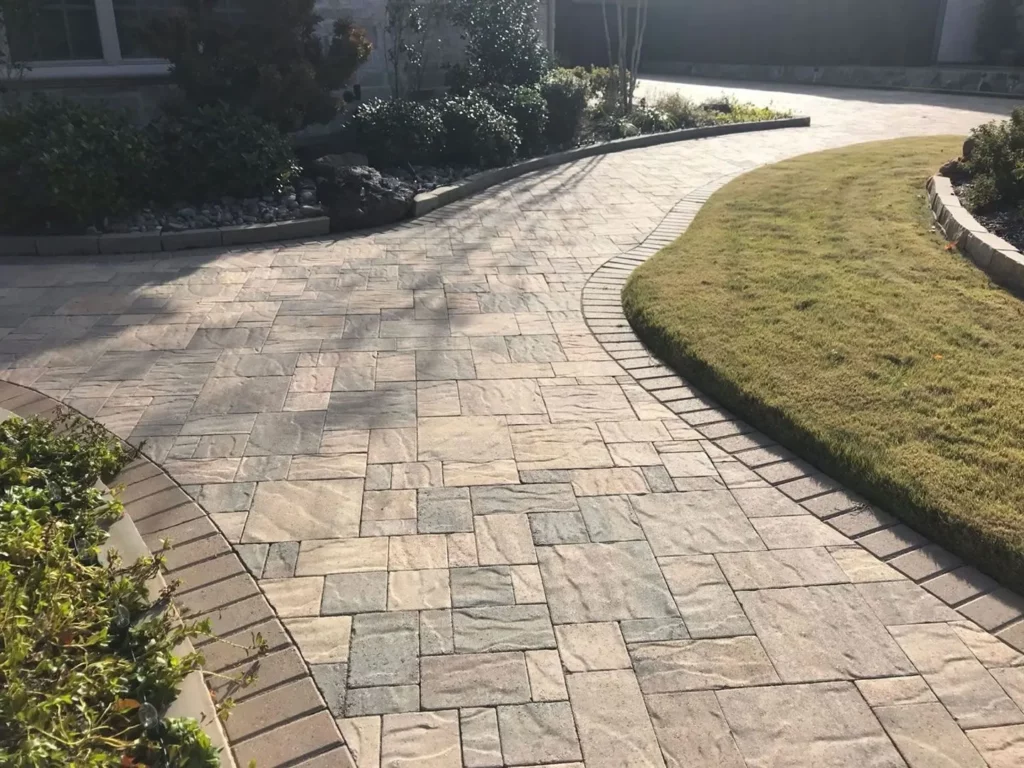
Creating Natural Flow in Your Landscape Design
The most important principle in walkway design is one that is easy to overlook: a path should feel inevitable. When done well, it should seem like it was always meant to be exactly where it is, following the natural movement patterns of the people who use it and the contours of the land it crosses.
Before a single paver is laid, the best designs start with observation. Watch how your family naturally moves through the space. Where do feet naturally drift between the driveway and the front door? What is the most comfortable route from the back patio to the garden? The answers to those questions should drive the path of your walkway, not the other way around.
In North Texas, where many DFW properties offer generous lot sizes and room to work with, curved walkways tend to feel more organic and landscape-friendly than strictly linear paths. Gentle curves slow the pace, invite exploration, and create a sense of arrival. They also allow you to work around existing trees, landscape beds, and other features rather than cutting through them.
For front entry walkways on more formal properties, a straight or gently angled approach can feel appropriately intentional and welcoming. The key is matching the path’s character to the architecture of the home and the overall tone of the landscape.
Width matters as much as direction. A garden path used by one person at a time can be as narrow as 18 to 24 inches. A primary front entry walkway should be at least 48 inches wide to allow two people to walk comfortably side by side. Connecting paths between entertaining areas benefit from widths of 36 to 48 inches to handle guest traffic without feeling cramped.
Choosing the Right Paver Size and Pattern
Paver size is one of the decisions that most directly affects how a finished walkway looks and feels. Smaller pavers, such as classic 4×8 brick-format units, create a detailed surface that works beautifully in traditional and cottage-style gardens. Larger format pavers, such as 12×12, 12×24, or even larger flagstone-style units, read as more contemporary and create a cleaner, more open visual impression.
Here is a practical guide to the most effective size and pattern choices for walkways:
- Smaller pavers in herringbone or basket weave patterns provide excellent interlocking strength, making them highly resistant to shifting under foot traffic and ideal for long paths with curves
- Medium pavers in running bond or offset patterns strike a balance between classic character and modern simplicity, one of the most versatile and popular choices for North Texas homes
- Large format pavers in a random or ashlar pattern deliver a high-end, custom look that suits contemporary architecture and open, minimalist landscape designs
- Mixed-size patterns using two or three complementary paver sizes add visual interest and a handcrafted quality that is difficult to achieve any other way
In the DFW climate, where summer heat can be intense, lighter-colored pavers reflect more heat and stay more comfortable underfoot. Textured surfaces also provide better traction in the rain and reduce glare on bright Texas afternoons.
Edging and Border Options That Finish the Look
Edging is where a good walkway becomes a great one. The border that frames your path defines it visually, prevents the paver field from spreading laterally over time, and gives the entire installation a finished, intentional quality.
The most popular edging approaches for North Texas walkways include:
- Soldier course borders, where pavers are set vertically or perpendicular to the main field, create a clean, traditional frame that works with virtually any pattern
- Contrasting paver color borders use a different shade or tone than the field pavers to draw a visual line around the path without changing the material or texture
- Natural stone edging adds an organic, landscape-integrated feel that works beautifully in garden settings where the path winds through planted areas
- Concrete restraint edging, installed beneath the surface along the outer edges of the paver field, provides structural stability that prevents pavers from migrating outward over time, which is especially important given North Texas clay soils that shift seasonally with wet and dry cycles
Landscape lighting integrated along walkway edges is another detail worth planning from the beginning rather than as an afterthought. Low-profile path lights, in-ground LED fixtures, or wall wash lighting along border plantings can transform a daytime walkway into an evening feature that dramatically elevates the entire outdoor experience.
Why Professional Installation Makes the Difference
Beautiful pavers installed on a poorly prepared base will shift, settle, and crack within a few years. North Texas clay soils are particularly challenging, expanding when wet and contracting during drought conditions in ways that put constant stress on any hardscape surface. A professional installation begins with comprehensive site preparation, proper base compaction, and drainage planning that accounts for these local soil conditions specifically.
At Precision Pavers, we back every walkway installation with workmanship that exceeds industry standards and a warranty that reflects our confidence in the results. Our team has spent decades understanding how DFW properties behave across seasons, and that knowledge shows in every path we build.
Ready to Design a Walkway You Will Love for Decades? Let’s Get Started.
Precision Pavers has been transforming North Texas outdoor spaces for over 40 years, and we would love to bring that expertise to your property. Contact our team today to schedule your design consultation and take the first step toward a walkway that is as functional as it is beautiful.