
Load Distribution: How Paver Driveways Handle Heavy Vehicle Traffic
When homeowners ask whether a paver driveway can handle their vehicles, the answer is unequivocally yes. But there’s more to the story. At Precision Pavers, we’ve spent over 40 years helping families understand the engineering that makes paver driveways exceptionally strong. The truth is, a properly installed paver driveway isn’t just capable of handling heavy traffic—it’s actually engineered to distribute vehicle loads more effectively than poured concrete or asphalt. The interlocking design, combined with quality materials and expert installation, creates a surface that flexes intelligently under pressure rather than cracking like rigid concrete. Our team, certified by the Interlocking Concrete Paver Institute, understands the precise specifications needed to ensure your driveway performs flawlessly whether you’re parking a family sedan, a pickup truck, or multiple vehicles daily. When you choose Precision Pavers, you’re choosing a team that combines decades of field knowledge with the latest installation standards to build a driveway engineered to handle whatever North Texas life brings.
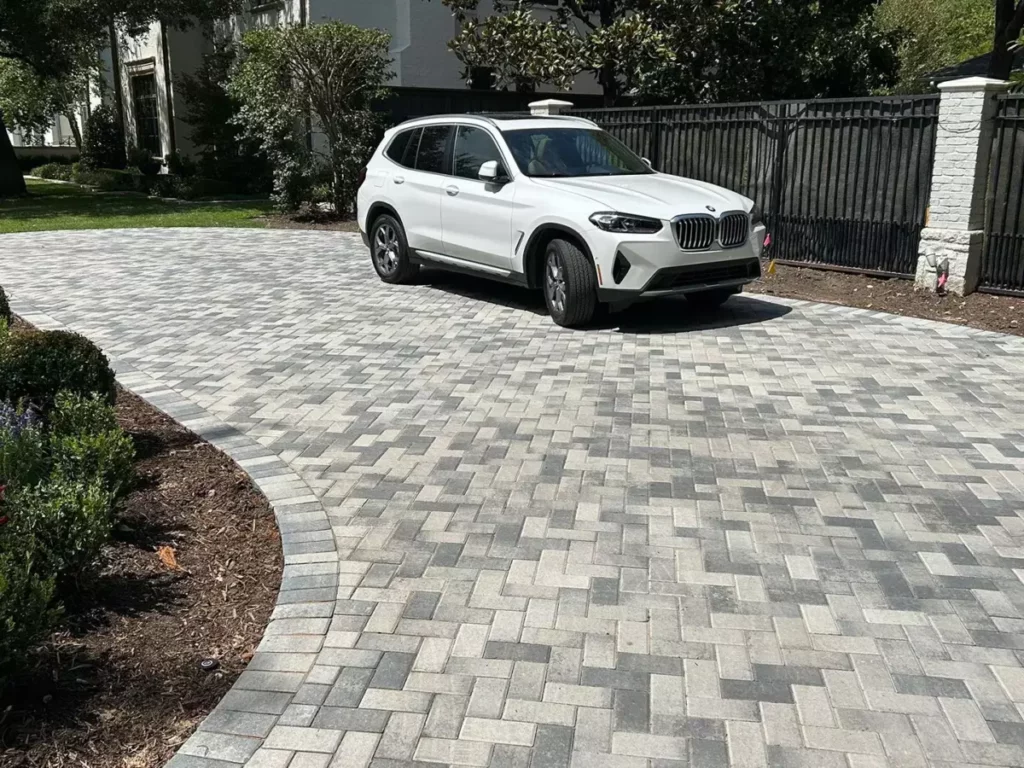
The Engineering Behind Interlocking Pavers and Weight Distribution
Unlike poured concrete, which is one large, rigid slab, interlocking pavers function as a system designed to distribute vehicle weight across a broad area. Each paver is laid tightly next to its neighbors, creating a modular surface that shares the load. When a vehicle tire contacts a paver, the weight doesn’t concentrate on just that single stone. Instead, the load disperses through the joints and across adjacent pavers, spreading the pressure across a much larger foundation. This interlocking mechanism is similar to how a chain distributes tension more effectively than a single rope. The joints between pavers are filled with sand and polymeric material, creating a flexible base that allows slight movement without compromising structural integrity. This flexibility is actually a strength, not a weakness. As vehicles drive over your driveway, the pavers can expand and contract slightly without cracking, accommodating normal ground settling and temperature changes that would cause rigid concrete to fracture.
Base Preparation: The Foundation of Load-Bearing Capacity
The strength of your paver driveway doesn’t rest solely on the pavers themselves. The foundation beneath is equally critical. A properly prepared base creates the stability necessary for your driveway to handle heavy loads effectively. Our installation process includes layers of compacted crushed stone or gravel, typically ranging from 6 to 12 inches depending on soil conditions and expected traffic levels. The compaction process is crucial. Each layer must be carefully compacted to remove air pockets and create a solid, unyielding base. When the subgrade is properly compacted, it provides even load distribution, which dramatically increases the total weight capacity of your paver driveway. We assess your site’s terrain, soil composition, and drainage requirements before designing the base. For North Texas properties, where clay soils are common, we account for seasonal moisture changes that can affect ground stability. A poorly prepared base will cause pavers to sink over time. A properly engineered base, installed by experienced professionals like our team, ensures your driveway remains stable and level for decades.
Paver Thickness and Material Quality for Heavy Loads
Not all pavers are created equal. The thickness and composition of your pavers directly impact their ability to withstand vehicle traffic. For residential driveways handling typical passenger vehicles, we recommend pavers at least 2 inches thick. For households expecting heavier loads like trucks or commercial vehicles, we often specify 2.5 to 3 inches or thicker. Thicker pavers have more material to resist flexing under weight, much like a thick board spans a gap better than a thin one. Material composition also matters significantly. High-quality concrete pavers are engineered with superior compressive strength, allowing them to withstand concentrated pressure from vehicle tires. Natural stone options like granite or basalt offer excellent durability for heavy-traffic applications. We help you select paver materials matched to your specific traffic expectations, ensuring your driveway is neither under-engineered nor overbuilt.
How Pavers Compare to Concrete Under Pressure
Many homeowners assume poured concrete is stronger, but properly installed pavers outperform concrete for load distribution. When concrete cracks from concentrated weight or temperature extremes, the damage spreads across the entire slab. When a paver is damaged, you simply replace that single paver without touching the rest of your driveway. Concrete also lacks flexibility. Extreme North Texas temperature swings—from summer heat to occasional freezing winters—cause concrete to expand and contract beyond its capacity, leading to stress fractures. Pavers accommodate these changes gracefully through their flexible joint system, maintaining structural integrity through seasonal changes.
Your North Texas Driveway Engineered for Performance
Whether you need a driveway for daily family use or heavier demands, Precision Pavers has the expertise to design and install a surface engineered for your specific needs. We’re not guessing about load capacity; we’re calculating it based on soil conditions, traffic patterns, and material specifications.
Ready to build a driveway engineered for strength and beauty? Contact Precision Pavers today for a consultation. Our team will assess your property, discuss your vehicle needs, and design a driveway that performs reliably for decades. Call us or visit our website to schedule an appointment with one of our engineering-minded designers.